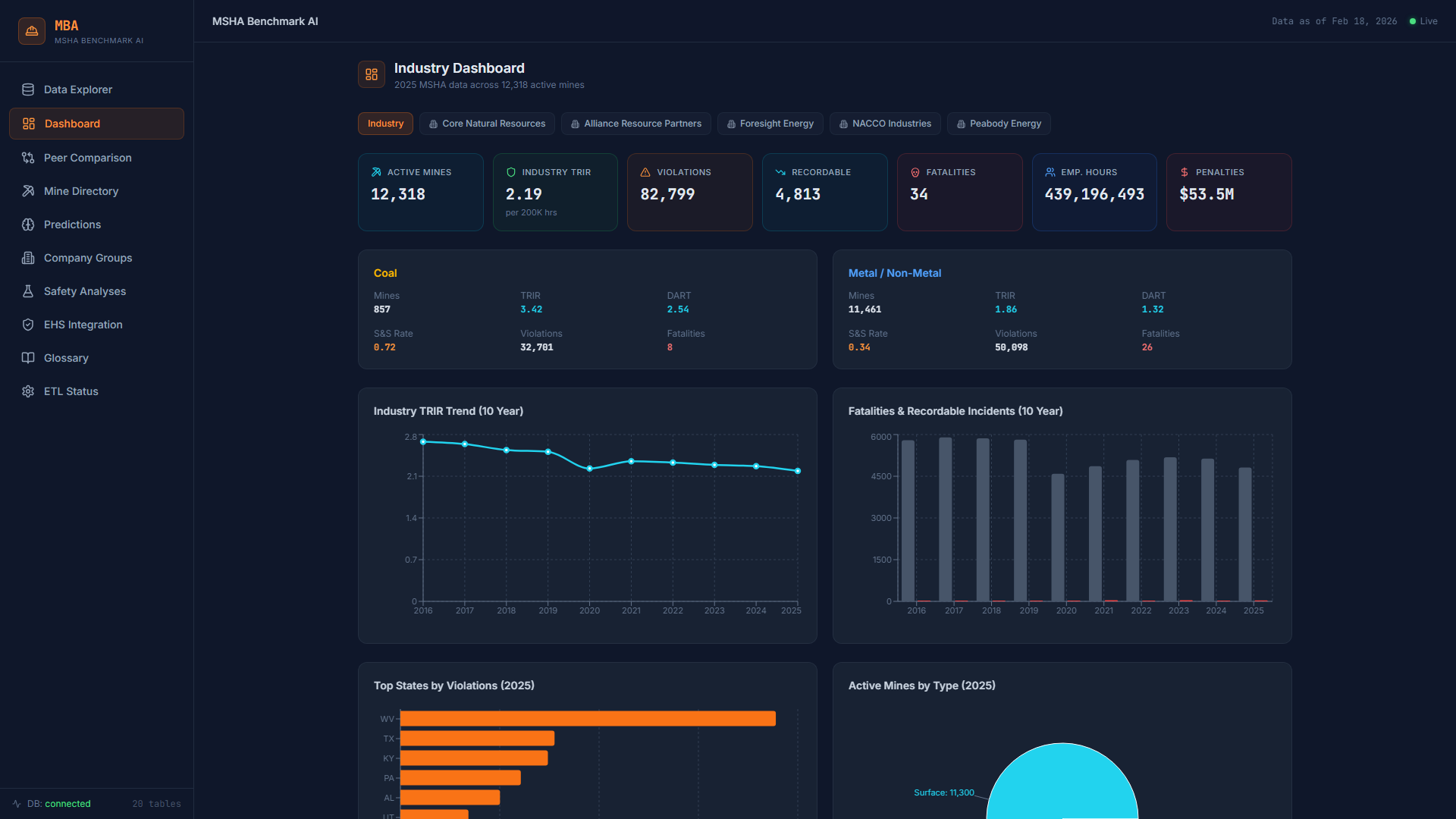
MSHA Benchmark AI doesn't just pull government data β it merges it with your internal EHS records to create a single, reconciled safety picture. All 20+ MSHA datasets are downloaded, cleaned, validated, and joined with your company's incident tracking, citation logs, and production systems into a unified dimensional model. Every week, automatically. Historical data back to the year 2000 available for trend analysis.
| Dataset | Coverage |
|---|---|
| Mine Violations (S&S and non-S&S) | All US mines, 2000βpresent |
| Accident & Injury Reports | MSHA Part 50 filings |
| Inspection Records | Regular and spot inspections |
| Annual Production Data | Tonnage by commodity and mine |
| Employment & Hours | For injury rate normalization |
| Penalty Assessments | Citation severity and penalty amounts |
| Mine Status & Operators | Active, idle, abandoned mines |
| Pattern of Violations (POV) | MSHA POV program status |
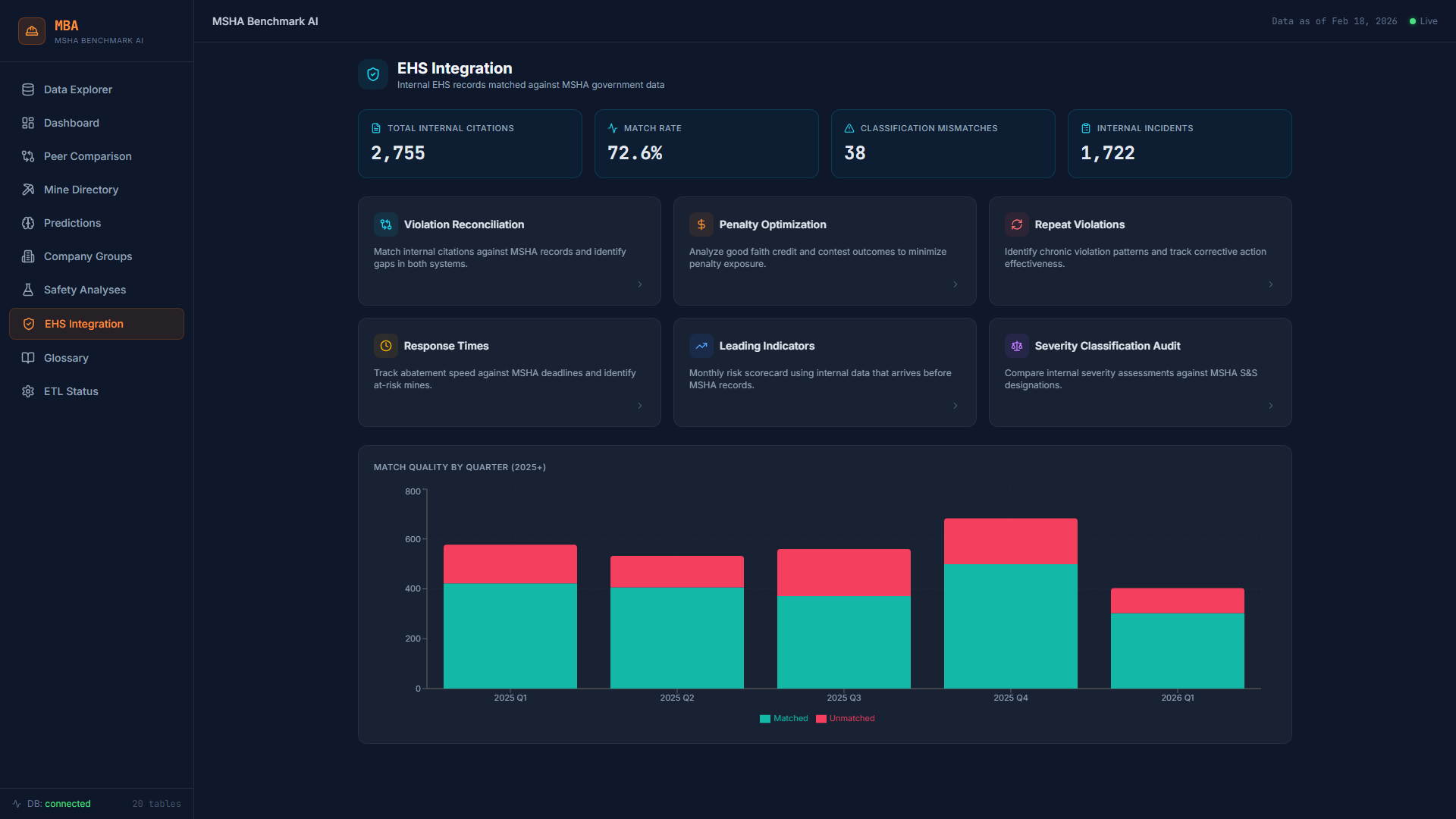
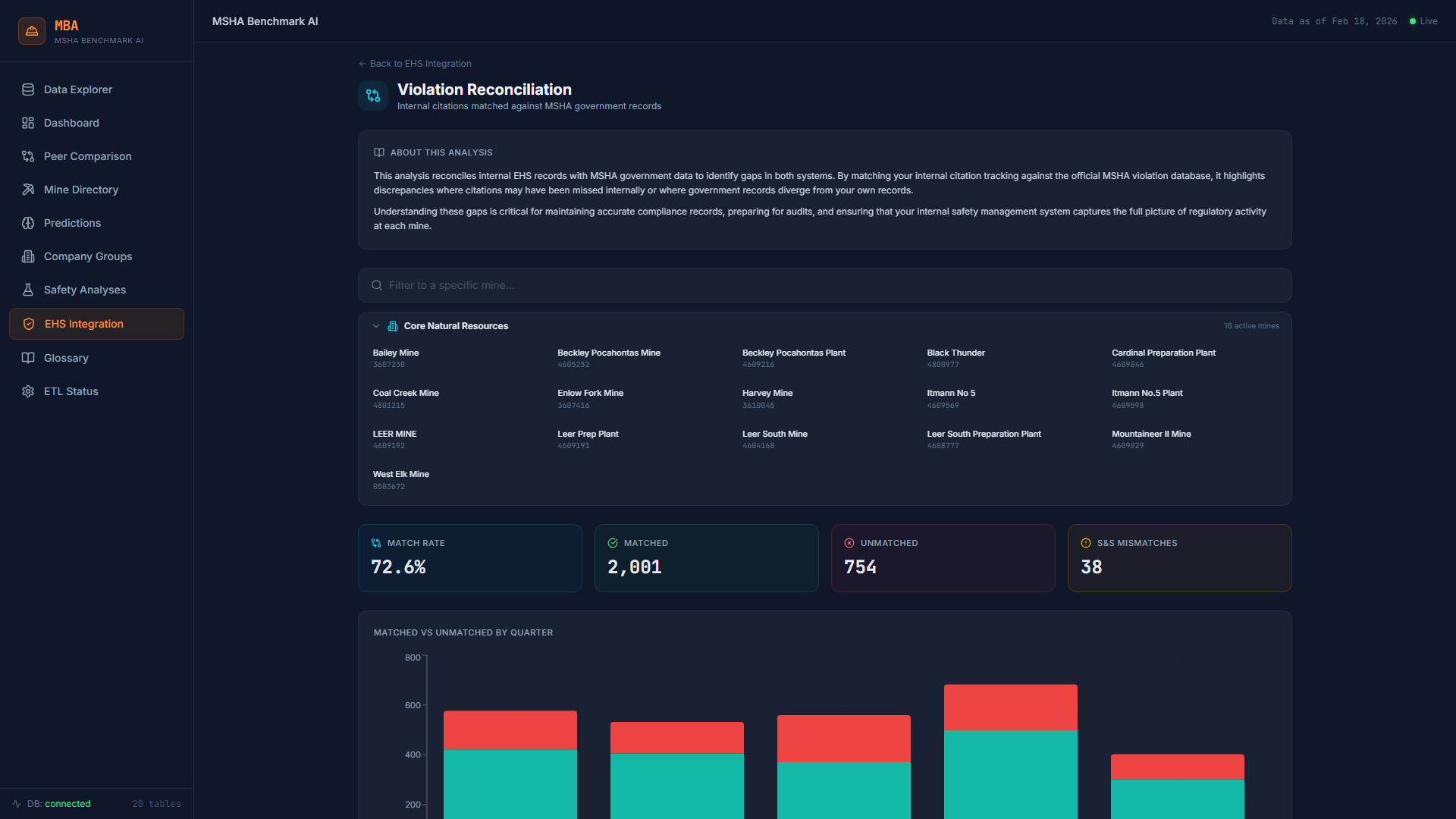
Your internal EHS records matched against official MSHA government data β identifying gaps in both systems, classification mismatches, and unmatched citations. Violation reconciliation ensures your internal tracking aligns with what MSHA has on file, while production records, shift data, and equipment logs are joined for normalized metrics and root cause analysis that goes beyond what either system can show alone.
Automated detection of unusual spikes in violations, injury rates, or inspection intensity relative to your historical baseline and peer group. Flags emerging issues before they reach regulatory attention.
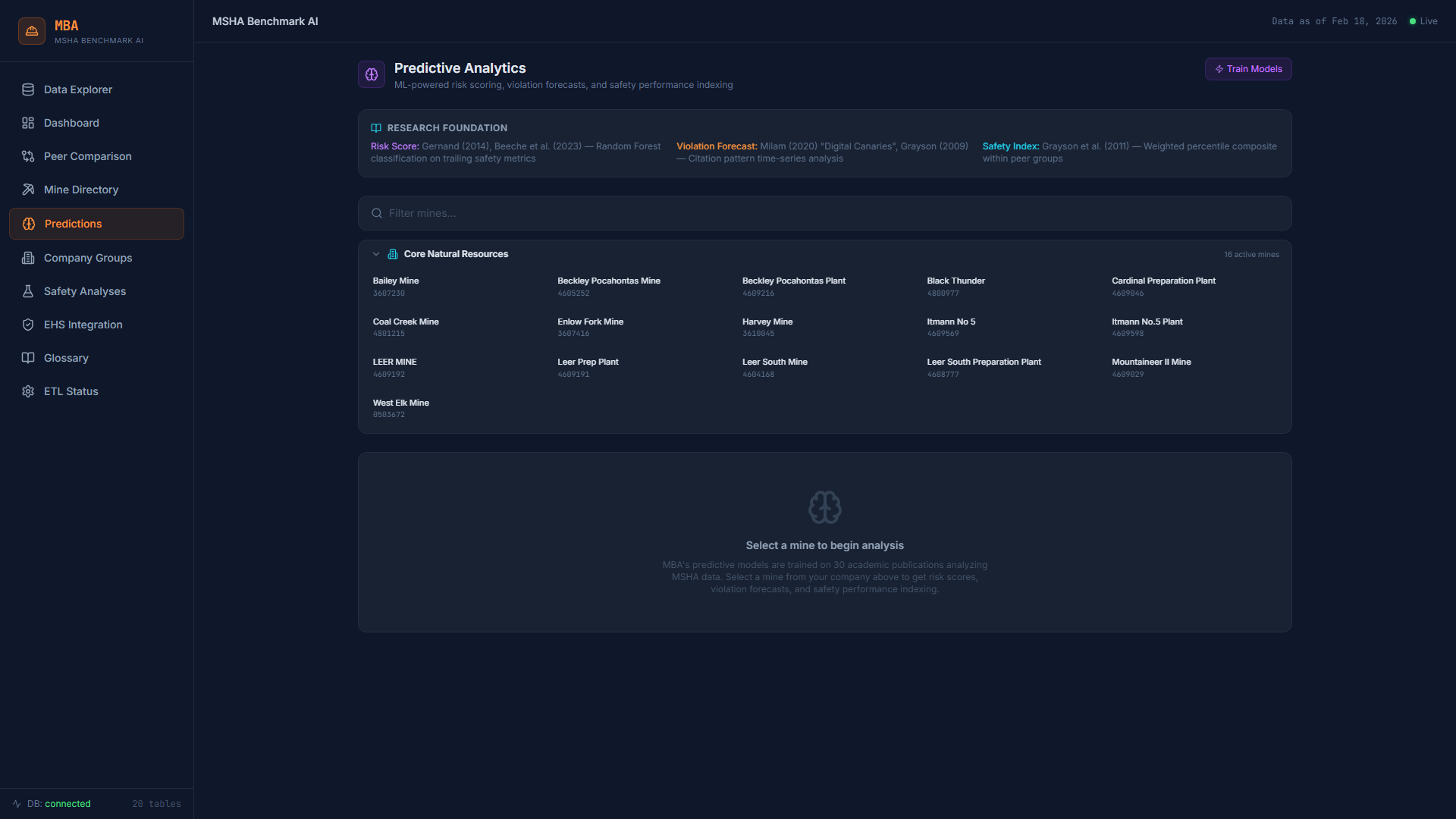
Predictive risk scoring that identifies mines trending toward Pattern of Violations status. The POV program results in elevated inspection frequency and significant operational constraints β early warning gives you time to act.
AI-generated executive summaries of your benchmarking position, updated weekly. Board-ready safety intelligence without requiring an analyst to compile it.
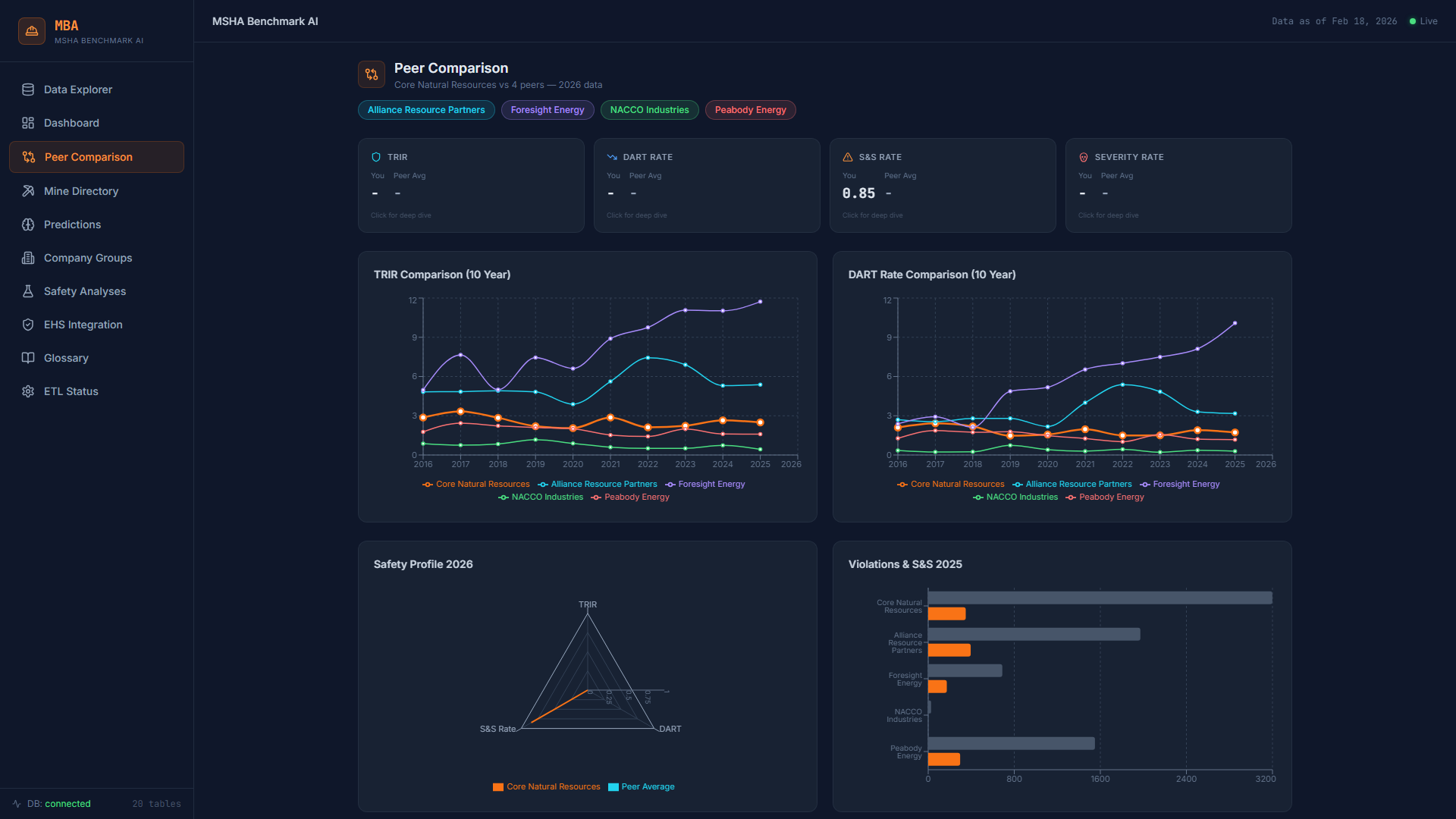
Default peer comparison pools include the major US coal operators. Custom peer groups can be built from any subset of the MSHA registry β by commodity, state, mine type, production volume, or any combination.
MSHA data is the most heavily studied mine safety dataset on Earth. Decades of peer-reviewed research have produced published models linking violation patterns, inspection frequency, production variables, and workforce factors to injury rates, penalty exposure, and fatality risk.
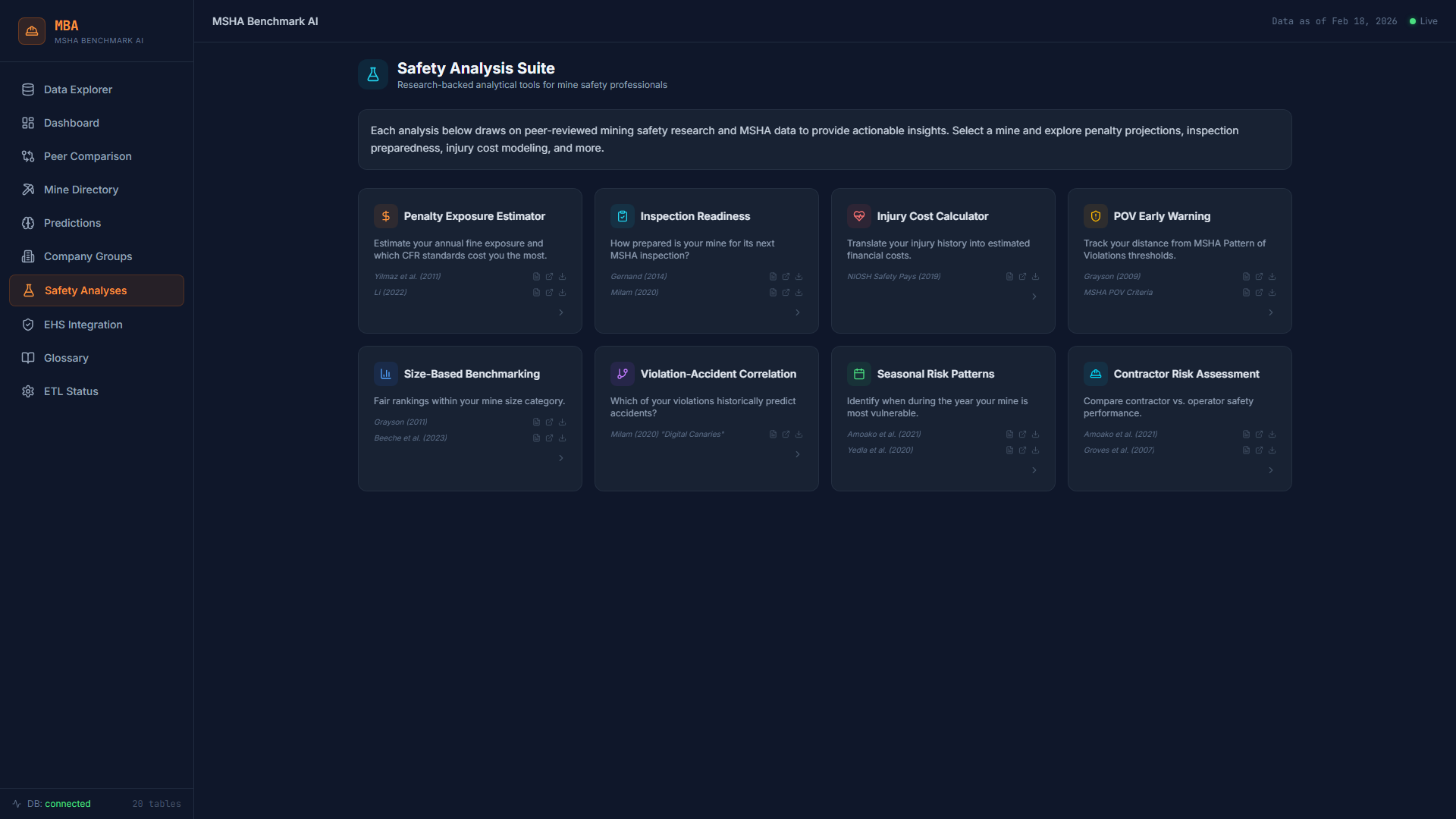
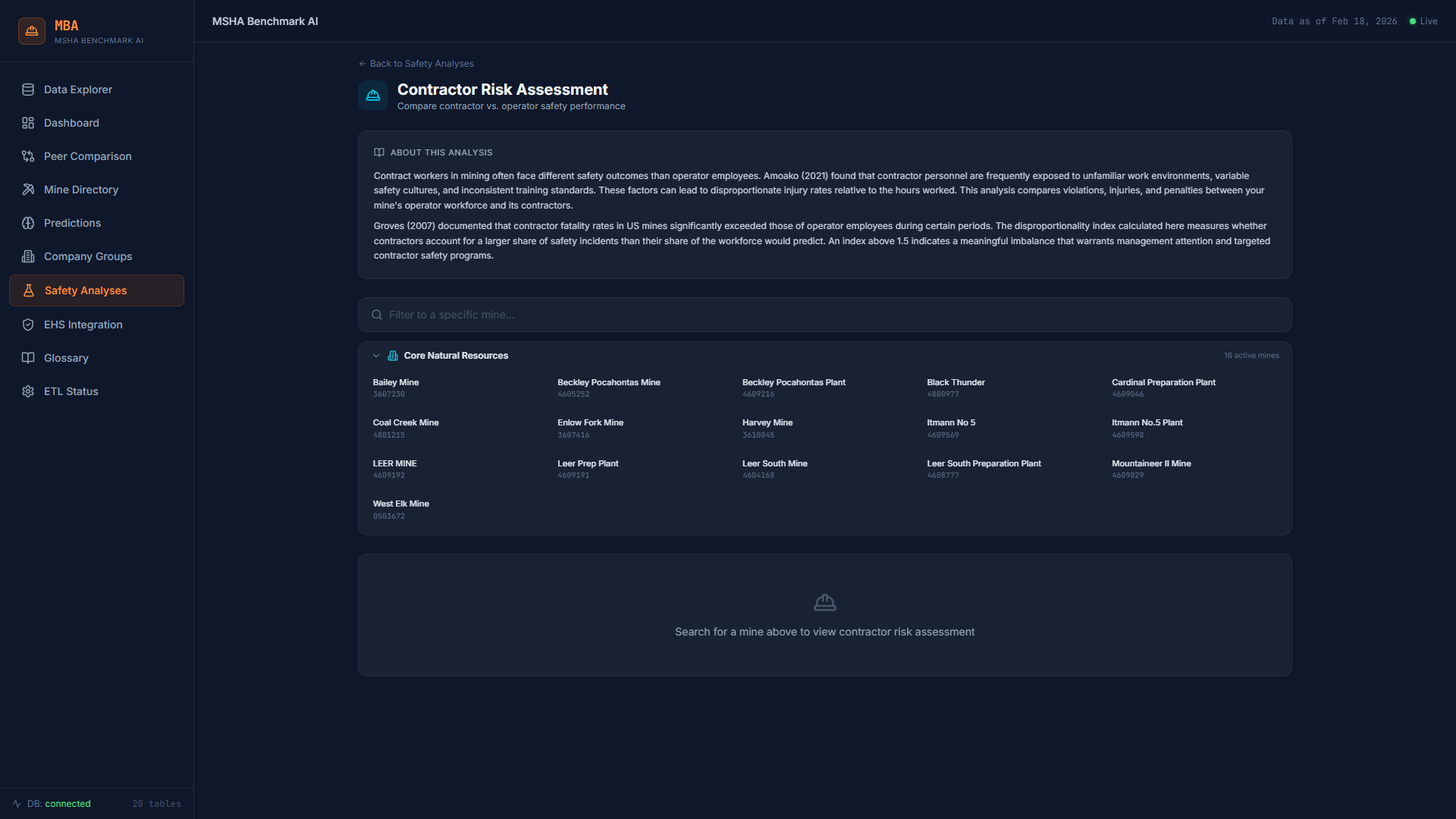
Most of that research sits in journals no safety manager will ever read. We change that. Our LLMs ingest peer-reviewed publications, extract the statistical models and analytical frameworks, and β with human curation from domain experts β operationalize them into tools that run against your data. Every analysis in the Safety Analysis Suite is grounded in published science, not proprietary guesswork.
Peer-reviewed papers are read by LLMs that extract methodology, statistical models, and key findings. Domain experts curate and validate the extraction. The models are then implemented as live analytical tools that run against MSHA public data combined with your internal records β turning academic research into actionable safety intelligence.
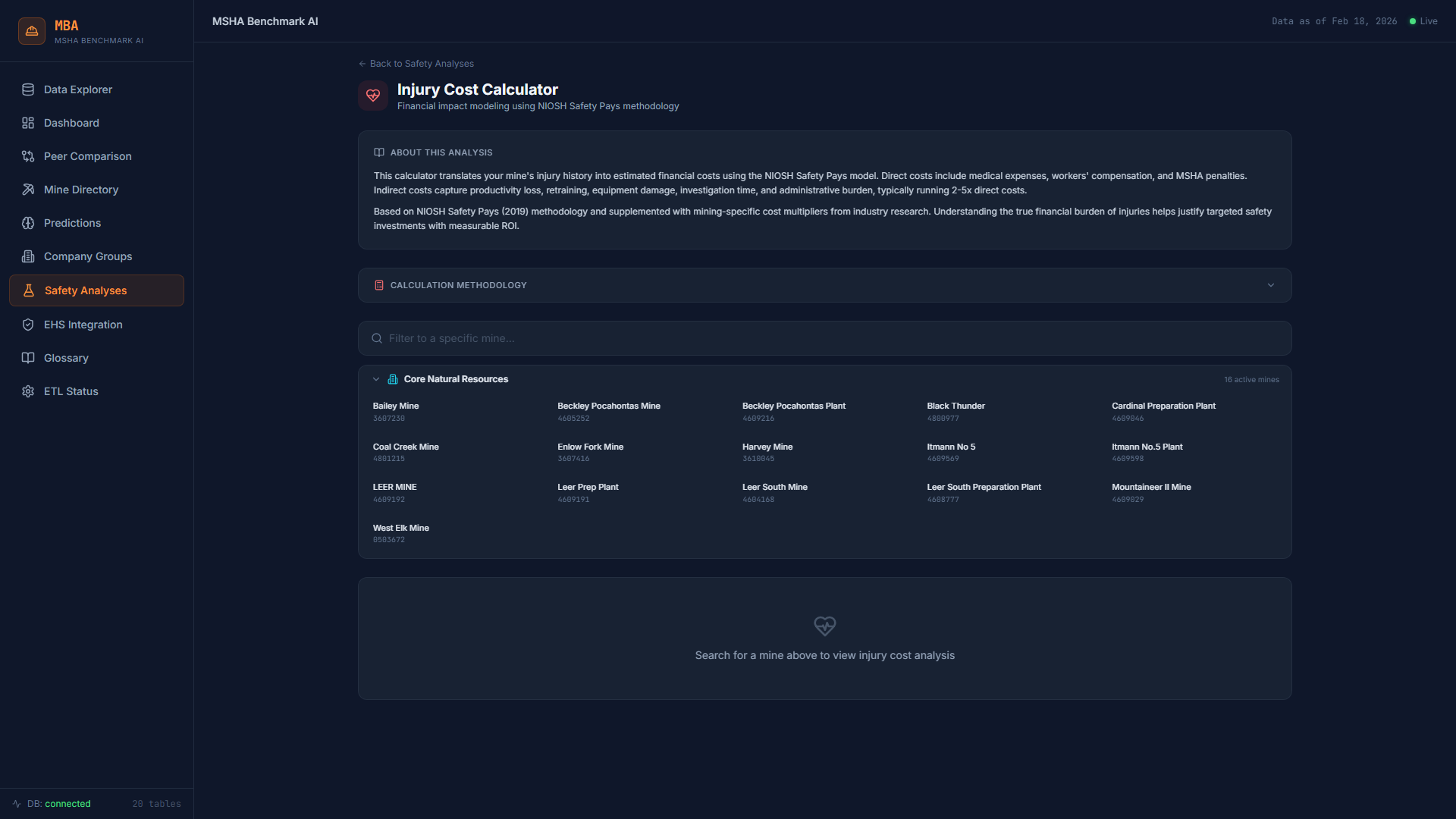
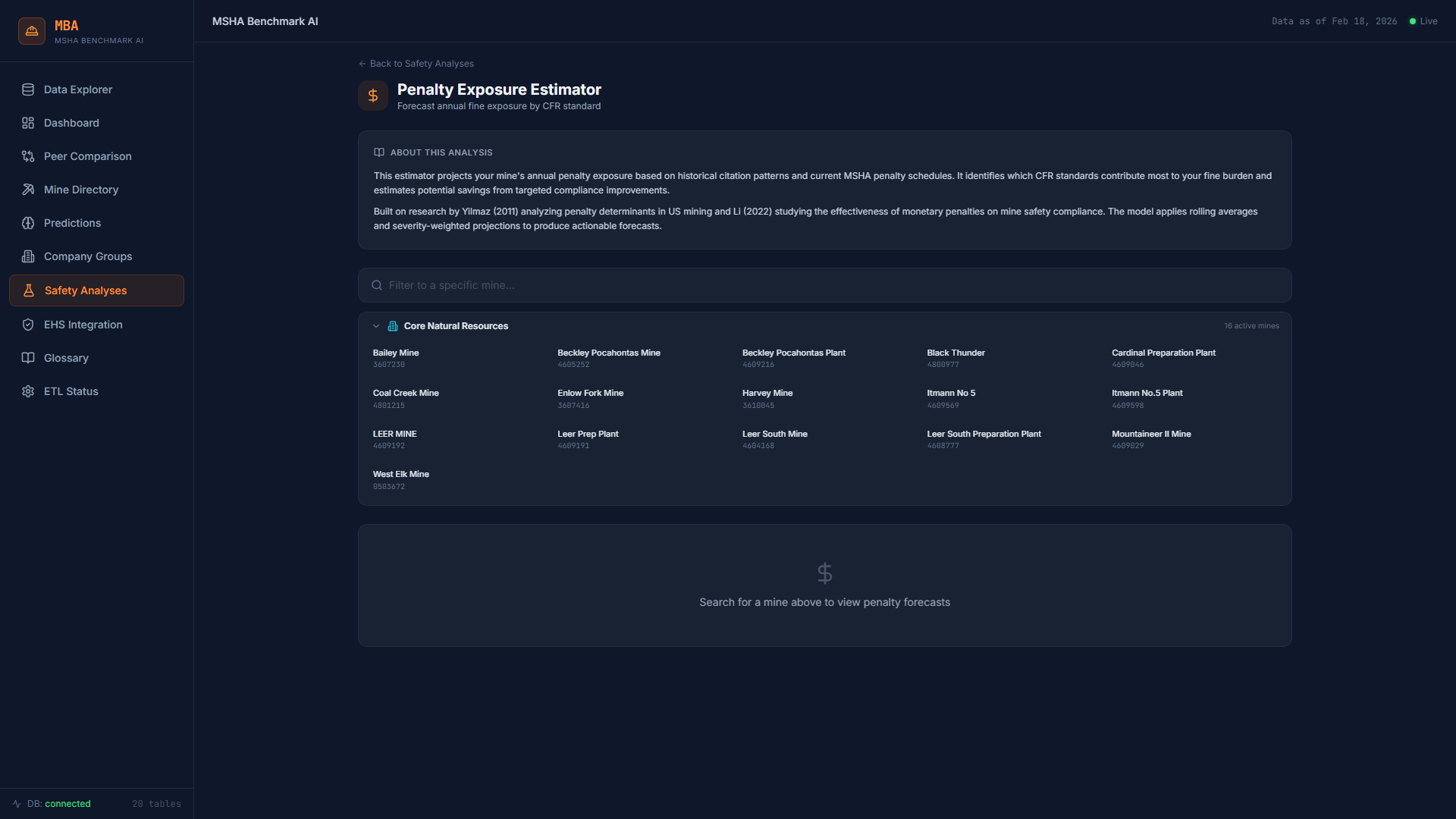
Each analysis cites its source research directly in the application:
We can produce a sample peer benchmarking report for your operation using publicly available MSHA data β no internal data required to get started. See what the analysis looks like before committing to anything.