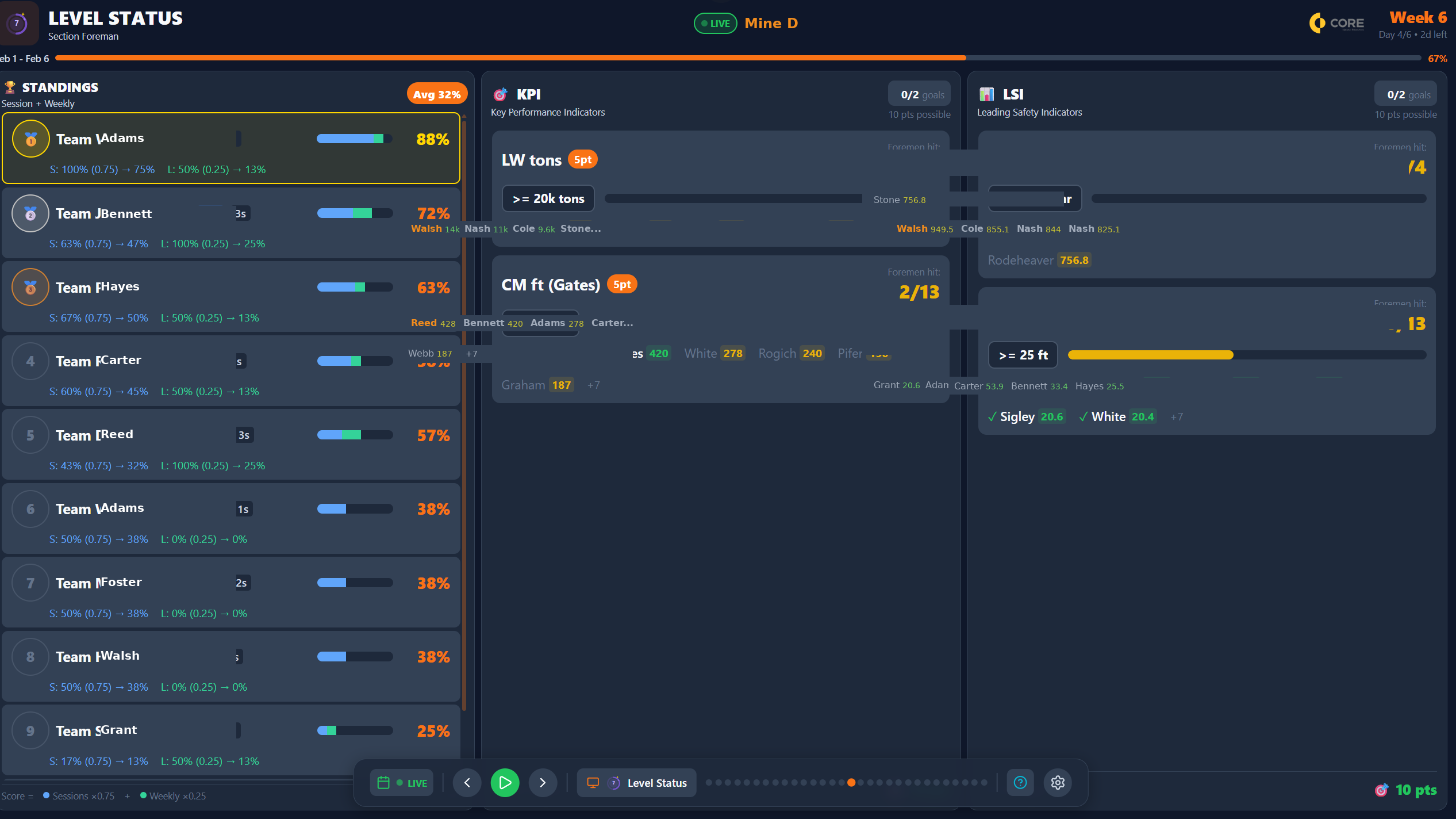
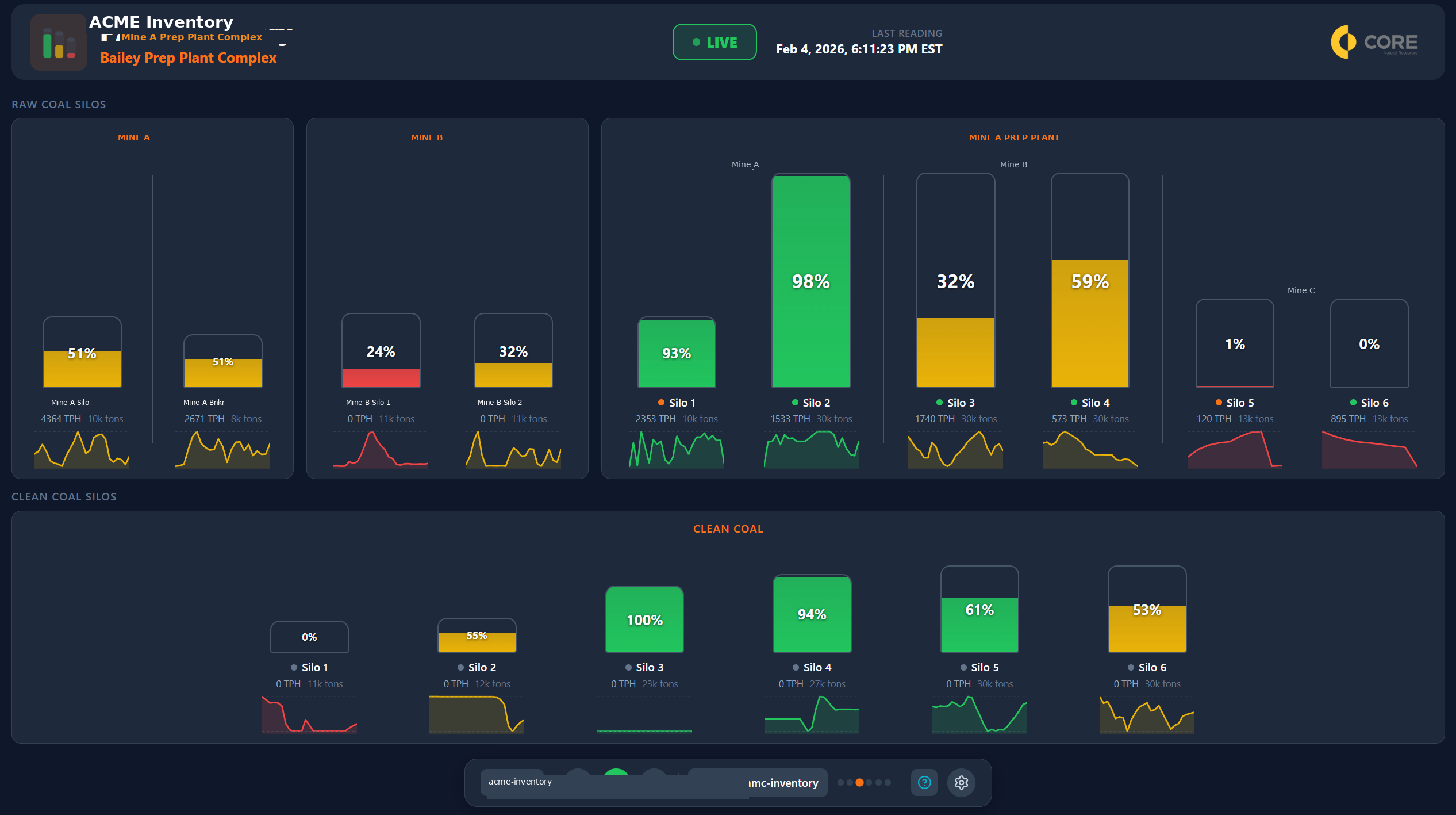
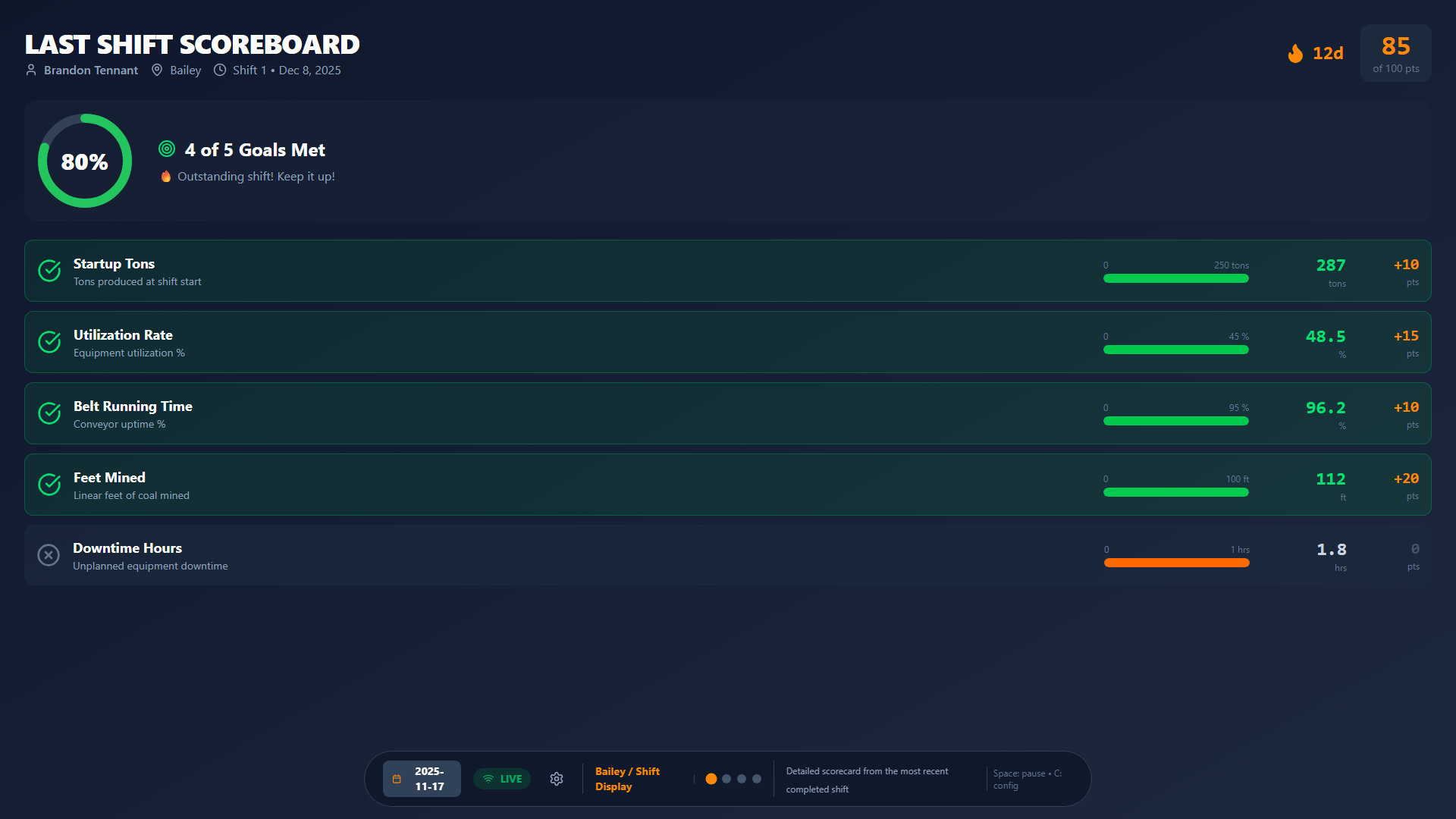
Dr. Sean Dessureault will co-present with Core Natural Resources' Eric Shereda during the COAL & ENERGY: TECHNOLOGY, INNOVATIONS, & AI/ML session on Tuesday, February 25th. The presentation highlights how operational data, time-series intelligence, and performance engagement workflows can be deployed in real mining environments to support measurable operational impact.
Following promising Phase 1 results at the Bailey Coal Preparation Plant and across the Pennsylvania Mining Complex, Core Natural Resources has elected to expand the program into Phase 2 — scaling TSAI and Performa from Pennsylvania to Core's broader portfolio of underground mines and preparation plants.
The algorithms work. The data is there. The dashboard looks great on the screen in the boardroom. But six months later nothing has changed on the plant floor. We've watched this happen for thirty years. The gap isn't in the math — it's in the operationalization.
Anomaly detected at 2am. Nobody on shift knows what it means or what to do. The alert fires, gets ignored, and the pattern repeats.
A consultant builds a great model. It works for 90 days. Then the process changes, the model goes stale, and nobody owns the retraining. Cost: the entire engagement.
Blue-collar workers don't change behavior because of a PowerPoint. They change behavior when they can see their own performance, understand why it matters, and have skin in the game.
Your SCADA, your ERP, your shift logs, and your lab results have never been joined in one place. Every optimization you've tried was working with incomplete information.
Most AI projects stall between the model and the plant floor. We've spent 30 years in that gap. Our engagements start with a consulting phase — understanding your operation, your data, and your people before recommending anything. If a platform isn't the right answer for you, we'll tell you that.
In partnership with Core Natural Resources — deploying TSAI and Performa across one of the largest coal producers in the United States, scaling AI-driven process intelligence from initial deployment to enterprise-wide operations.
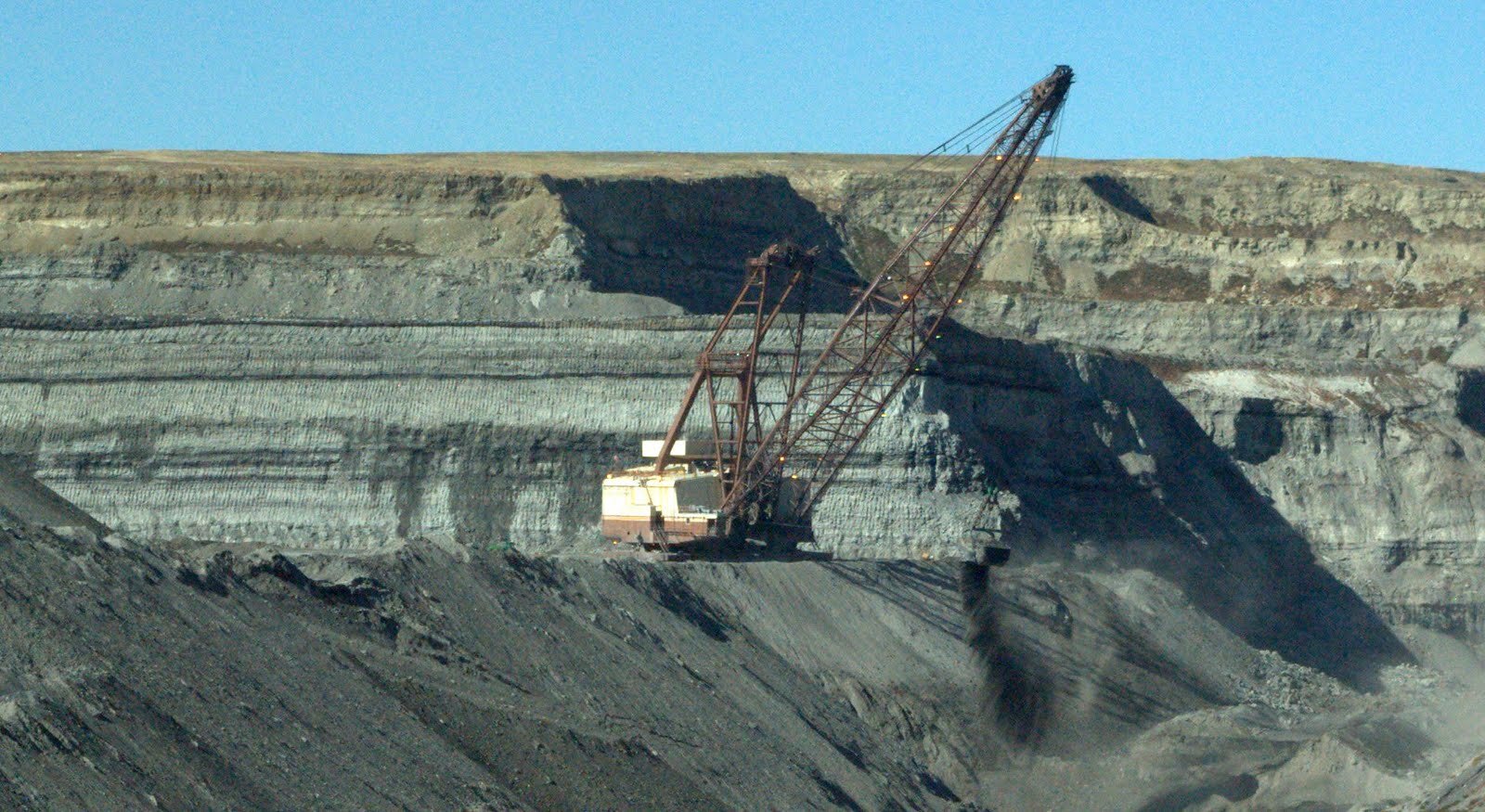
One of the world's largest coal preparation plants. Three mines. Five longwalls. Thousands of tags. Here's what the data actually showed.
Two platforms that handle the full operationalization cycle — real-time intelligence from the plant floor to actionable performance for every operator on every shift.


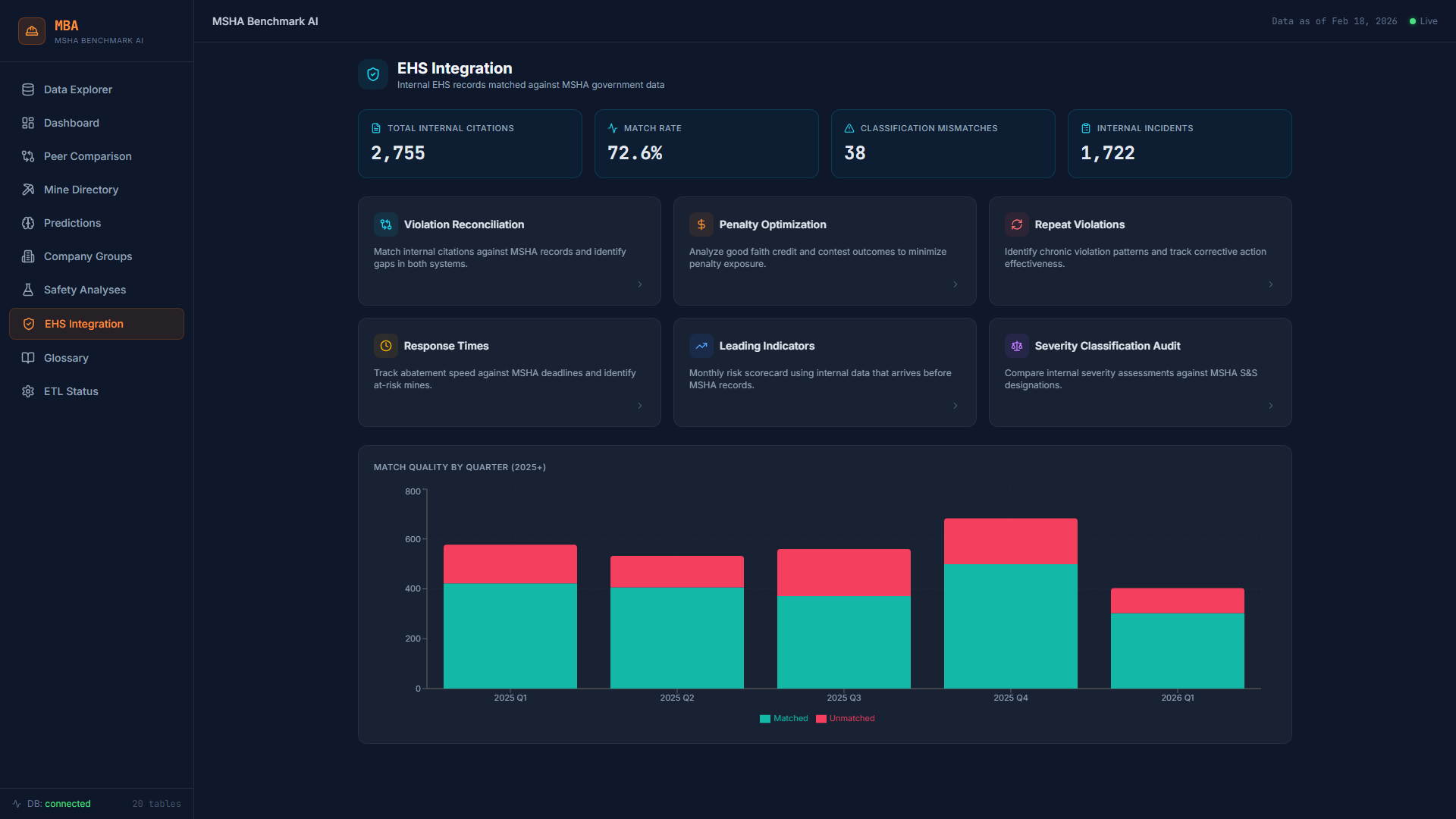
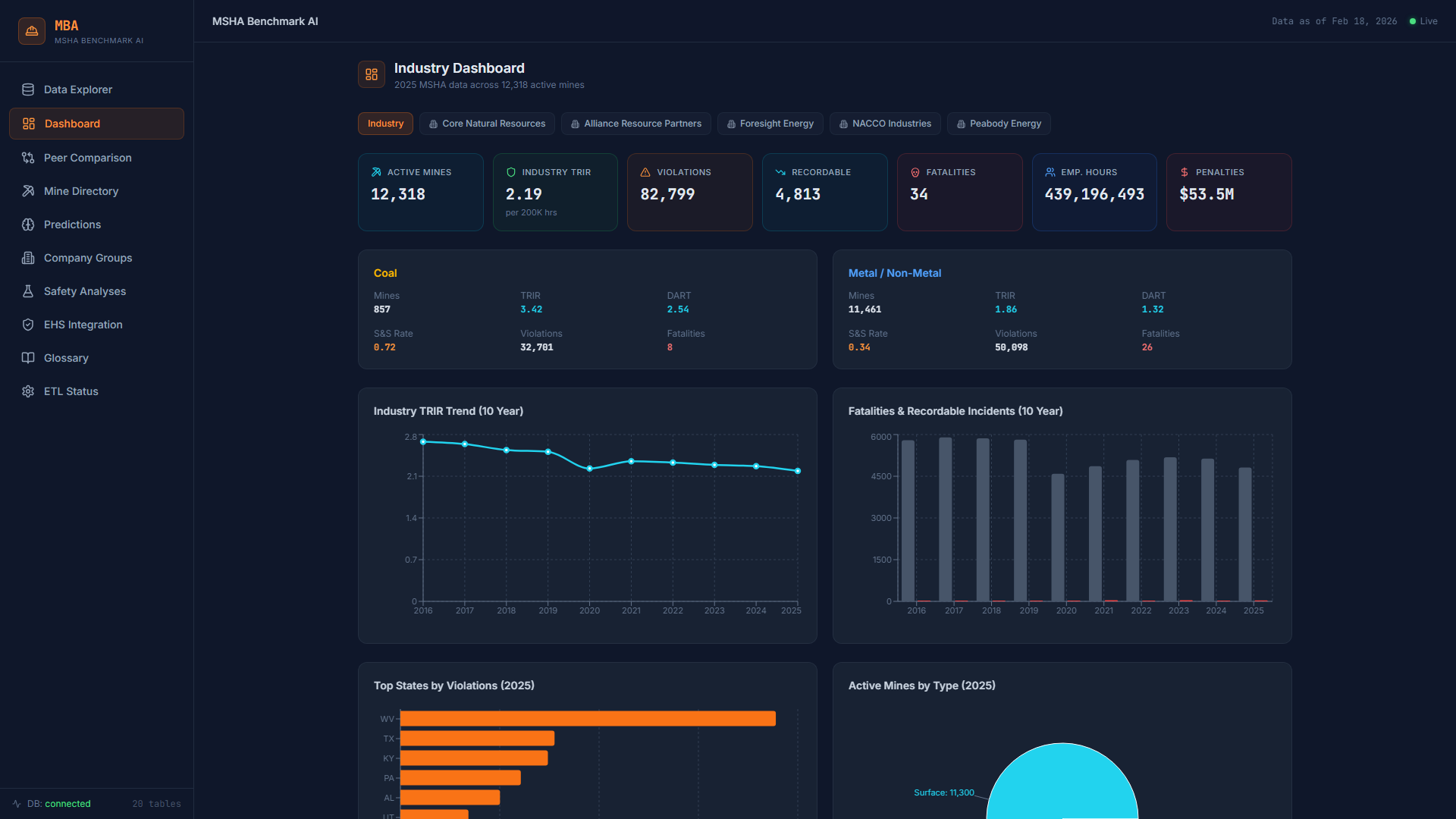
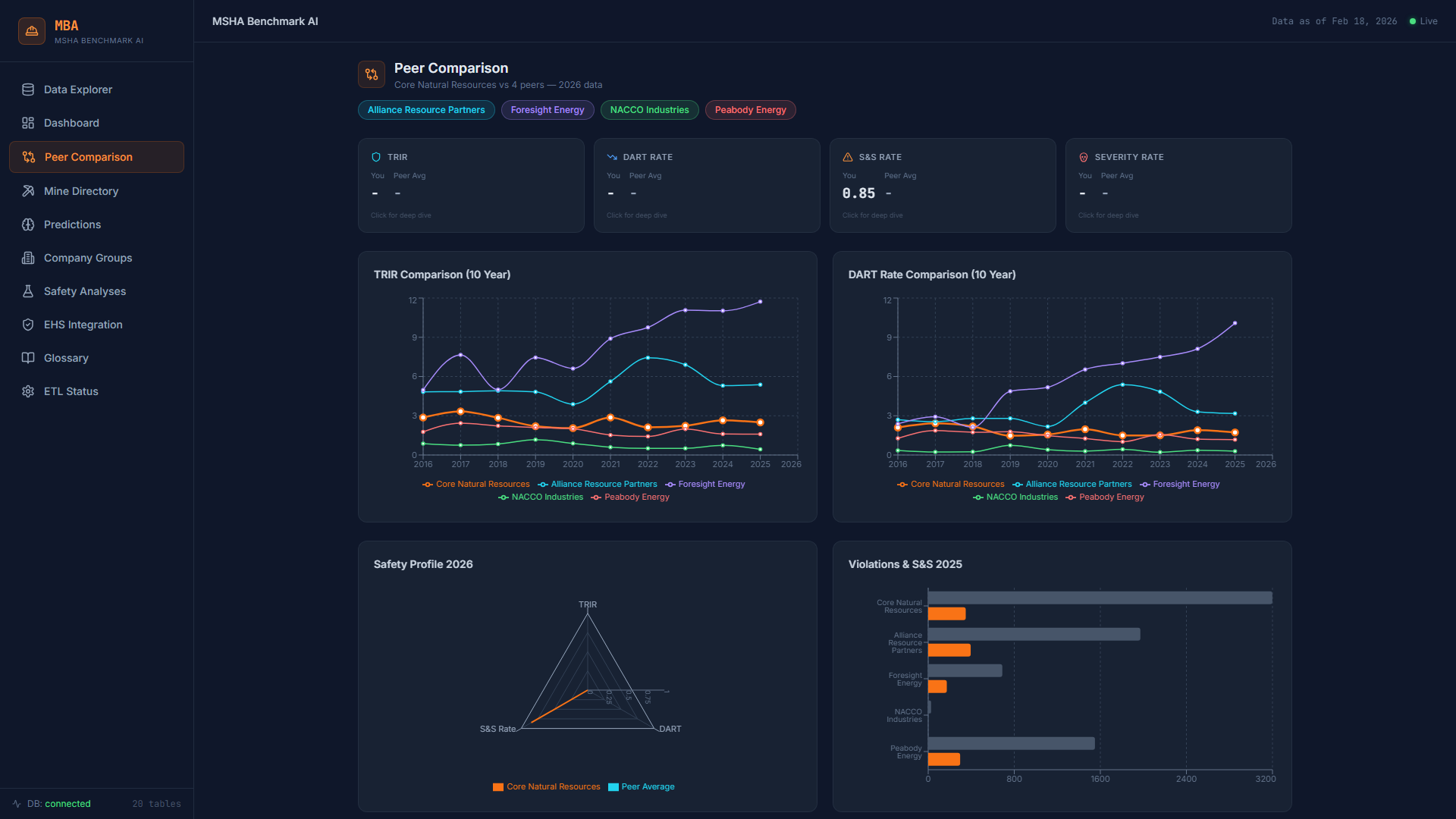
Every US mining company files detailed safety data with MSHA — violations, accidents, inspections, production hours, employment, contractor activity, and more. Decades of mandatory reporting across the entire industry have made this one of the most researched and studied mining safety datasets in the world, with a deep body of peer-reviewed academic work built on top of it. The question is: how does your company take advantage of that mountain of research and data to benchmark your own performance?
MSHA Benchmark AI gives you three capabilities. Internal benchmarking — compare your own sites against each other to find outliers and best practices. Peer benchmarking — measure your performance against every operator in your commodity and region. And research-grade analysis — we use LLMs to systematically read and apply peer-reviewed academic research on mining safety and injury rates, under the supervision and curation of a human expert, to build deep analyses against your own data combined with the full MSHA public dataset. Your operation measured against published science, not just against your competitors.
The findings don't stop at a report. Each analysis produces action-oriented recommendations that feed directly into Performa's accountability system — turning research insights into specific, trackable follow-through on the ground.
Updated weekly from the MSHA open data portal. AI anomaly detection flags unusual spikes in violations or injuries. Predictive risk scoring identifies mines trending toward Pattern of Violations status before MSHA does. Natural language executive summaries included.
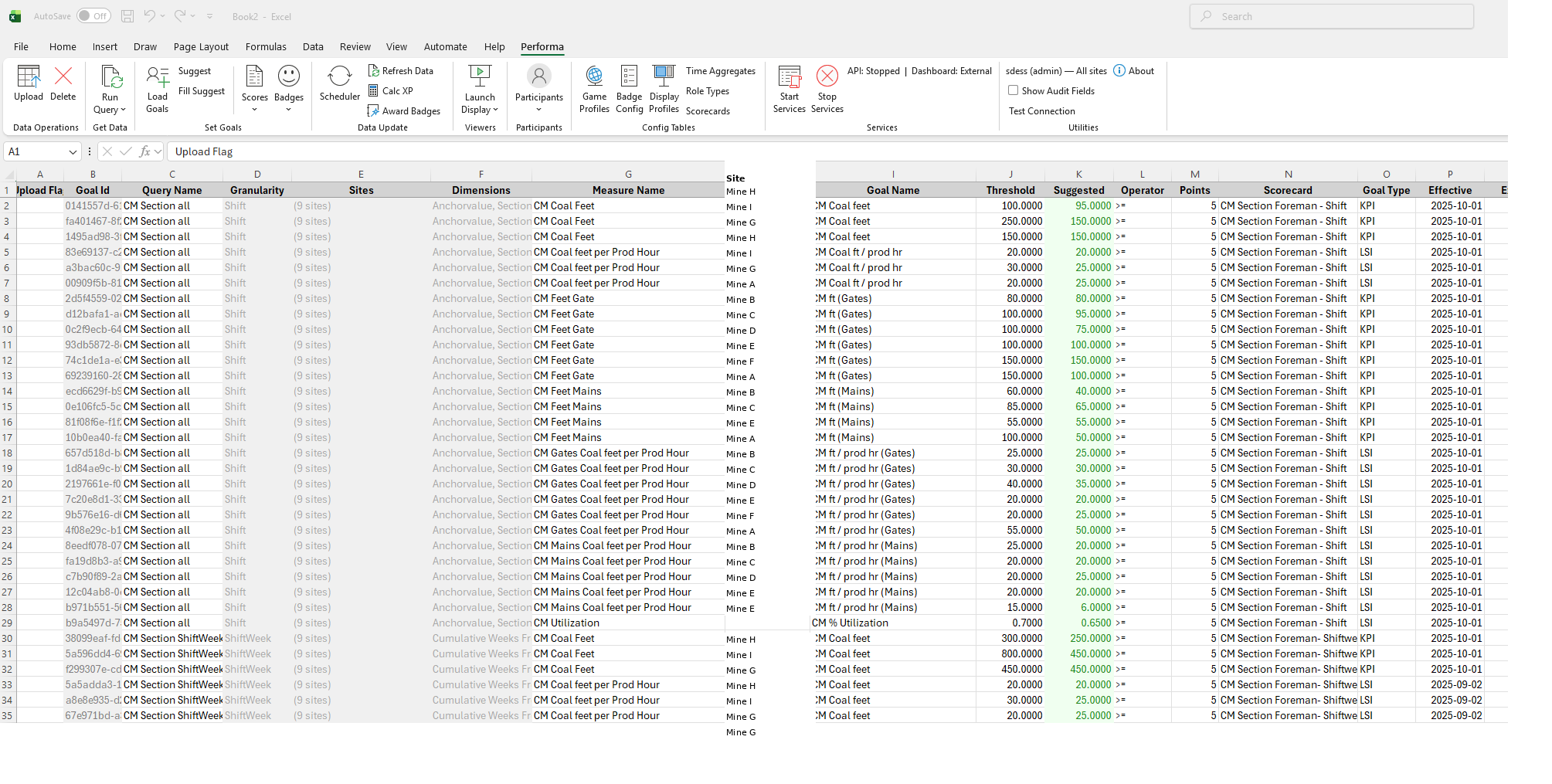
Both platforms are fully accessible from Microsoft Excel via C# add-ins built with Excel-DNA — no new software to learn, no browser required, no IT approval needed for most operations. Data administrators and supervisors work in the tool they already use every day.
Industrial displays aren't web apps. They run 24/7 on screens in control rooms, on the floor, and in management offices. We build for that environment — screen rotation systems that cycle through HMI emulations, gamification boards, KPI dashboards, and embedded Power BI reports in a single continuous loop.
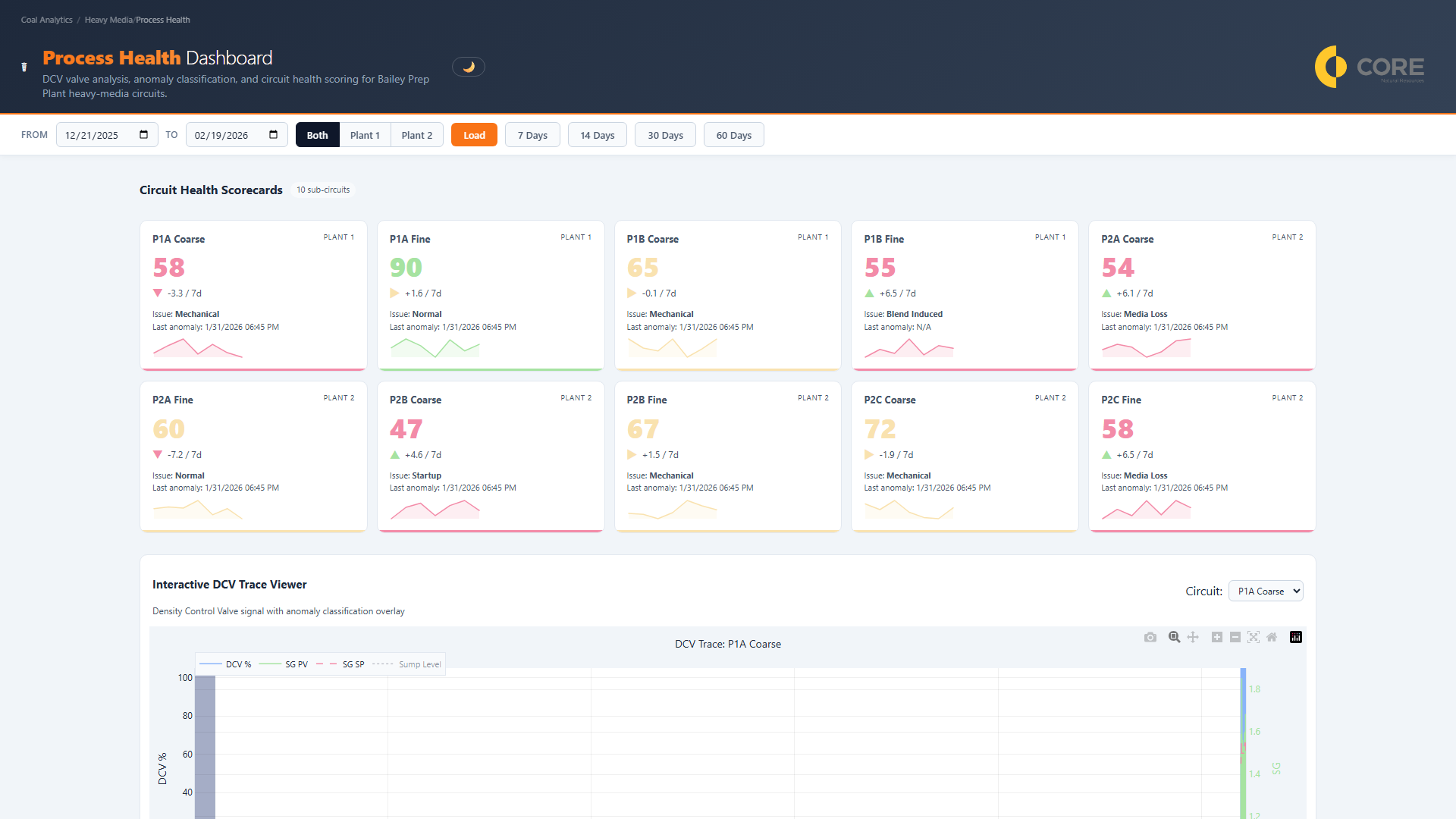
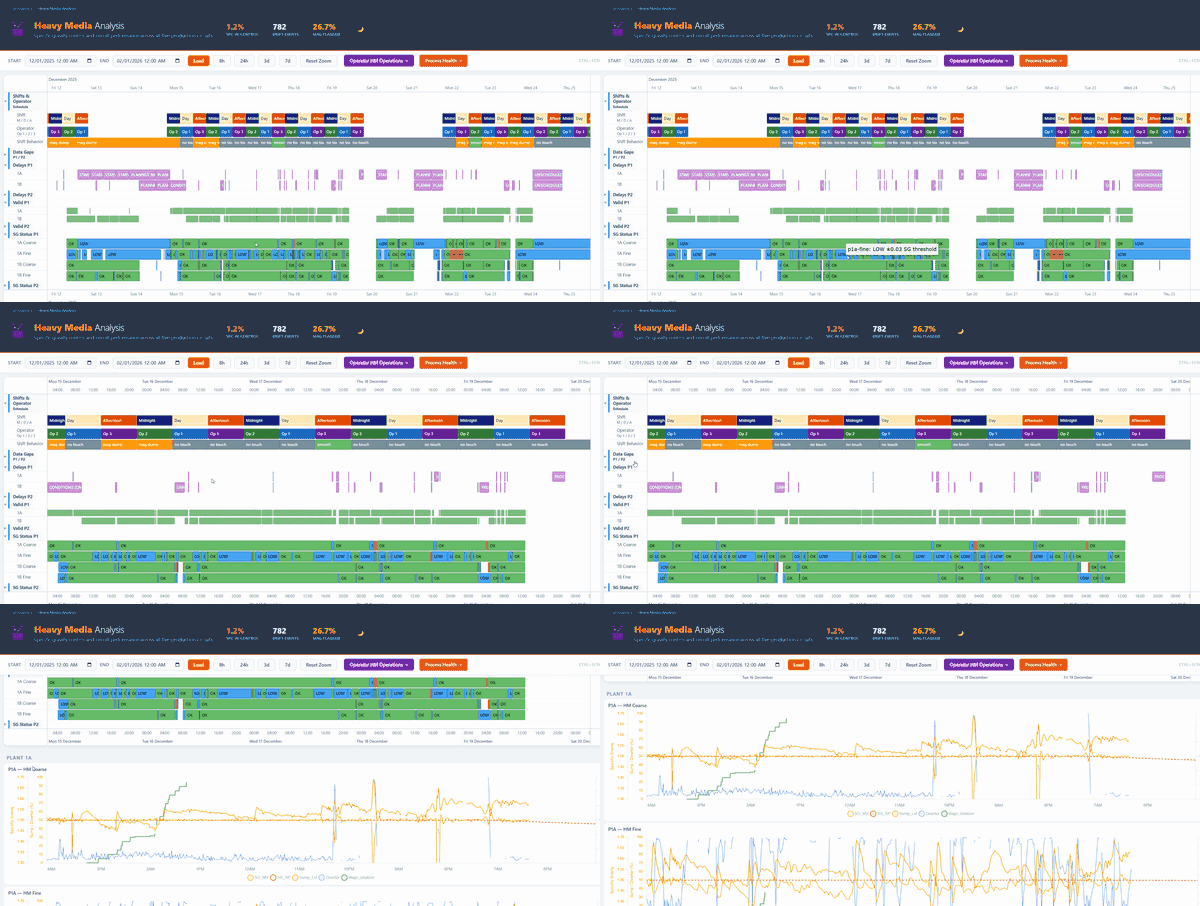
We recreate HMI-style process screens in React — the same visual language operators already know from their SCADA systems, but with analytics overlays, anomaly highlights, and real-time AI recommendations embedded directly into the familiar interface. No new mental model required.
Control room displays rotate automatically between content types — process health dashboards, operator performance scoreboards from Performa, HMI screens, embedded Power BI reports, and shift summary cards. One screen. Full operational picture. No manual switching.
If your organization already runs Power BI reports, we embed them directly into the rotation alongside TSAI and Performa displays. Existing BI investment preserved. Data warehouse reports and real-time sensor dashboards coexist on the same screen.
Designed for large-format displays in dusty, high-ambient-light environments. High contrast, large typography, color-coded status. Runs on standard industrial PCs and thin clients. No cloud dependency — everything operates on-premise on your site network.
Dr. Data Mining was built around a simple observation: the mining industry has never lacked for data. It has lacked for people who could turn that data into decisions that stick on the plant floor. Founded by Dr. Sean Dessureault — a mining engineer, serial entrepreneur, and former tenured professor — the company brings together three decades of experience designing, deploying, and supporting data systems in heavy industry.
That experience spans the full cycle. From building the first university research program in mining information technology at the University of Arizona, to founding MISOM Technologies — a mobile app and IoT company that was bootstrapped from consulting, grew through a Series A funding round, and was acquired by MST Global (now Komatsu) in 2017. From serving as VP of Technology and Innovation at The Mosaic Company, scouting and evaluating emerging technology across global operations in Florida, Saskatchewan, Brazil, Saudi Arabia, and Peru — to building Dr. Data Mining as the culmination of everything learned along the way.
Our clients typically engage us first as consultants. We assess their data maturity, identify the highest-value optimization opportunities, and develop AI algorithms against their actual process data. When the findings are compelling enough to warrant a permanent system — which they usually are — we deploy TSAI and Performa as the operationalization layer. The consulting engagement funds itself through the performance improvement it uncovers.
Currently deploying across 11 active sites at a major US coal producer — prep plants and mines across four states.
We live comfortably in both the time-series world and the traditional data warehouse world. We design and deploy SQL Server and PostgreSQL data warehouses, SSAS tabular models, and integrated datasets that bring together SCADA, ERP, lab, and shift data. TSAI handles the real-time sensor layer. The data warehouse handles everything else. They work together.
Few large initiatives succeed. Small seeds grow strong roots.
We have an excellent legacy of analytics. Use known standards.
Flow through the entire data-to-action process as fast as possible. Start using data.
The most used data is the most accurate. Don't wait for perfection before acting.
Through detailed feedback, they'll value the data more.
Consultants and tech companies often overhype. Rely on what works.
Most engagements begin with a no-obligation conversation about your data and what might be possible. We'll tell you honestly whether there's a fit — and if there isn't, we'll point you in the right direction anyway.